Featured Publication – How to Wear Grunge by Ruth Stacey

Our featured publication for January is How to Wear Grunge by Ruth Stacey, published by Knives Forks and Spoons Press.

“Ruth Stacey’s How to Wear Grunge eschews nostalgia and the self-fulfilling mythology of rock’s nearly-famous excesses for a fierce, feminist holler back into the feedback of another place and time, in all its bleached and sticky-carpeted illusions and almost-glory. Between truth or dare narratives that toy with the tension of hard facts – “Too gloomy, tell me about the prettiness again. / No. Tell me the worst thing” – these poems are wild and wise, and faultlessly written. There is a beating rock’ n’ roll heart of riot-grrl rebellion in every line. Stacey is a fearless and utterly compelling writer, whose candid, courageous poetry takes on the prevailing narrative and places women at the very epicentre.” Jane Commane

“In How to Wear Grunge, Ruth Stacey has achieved a bittersweet examination of brutal youth and violent love, with expert attention to the timing of acceptance, obsession and revelation. There’s almost a contact-high to these poems, an intoxication that has been carefully crafted to provide relief from the horrors of the past and of each other, creating a deceptively fragile romance of a sub-culture that encouraged the dirt and distortion of the fragmented self. However, once we have questioned the lives of the damaged, haunted souls in this cool as hell collection, what burns through is strength and survival, wounds that gush with the language of dark joy, the sweet stink of dope and incense, a promise (to past, present and future selves) tightly rolled into a joint so full of flavour it will leave your mouth watering. How to Wear Grunge is ultimately a kaleidoscopic questionnaire. There are no right or wrong answers. In the end, we all dance to something. We make noise, we hurt each other and, sometimes, we forgive.” Bobby Parker
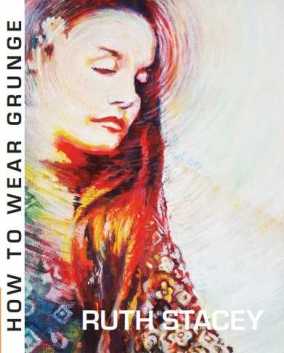
grungecover


Her Name

She left a quickly scrawled business card, listing her attributes:
bright, witty, sexy, tenacious, generous,
irresistible, reckless, wild, petite biche

Name: Carey Hunter

Age: 20

Address: Somewhere familiar, cold snap in the air, city buzzing,
guitar music playing, lyrics aim and circle: theme gloom/not gloom.

Voice: Growl, low, high, light, whispered, bellowed, impossible
to describe. Butterfly made of paper, caught in the draft.

Eyes: Fox coloured. I’m certain, fox-russet, copper.

Smell: You can’t smell her through the internet. Come on.


Wasted

Drinking in the park, drinking on a false id
Drinking cider, thunderbirds, 20/20, taboo
Drinking to get courage, drinking to dance
Drinking, drinking, drinking until you
Fall over & say all the wrong things
Shout, cry, get lost, kiss the wrong man
Kiss the right girl, feel nothing, drink!

Drink too much for your small frame
Drink like all the boys you hang with
Drink so much at your work drinks
You have to take some ecstasy to sober up
Drink so you have to apologise: sorry, sorry!
Drink like you are in the longhouse,
Drink because sobriety is painful, drink!


people would drift in

at different times, everyone would wait
play pool, drink cheap beer
upstairs, at The Crown
go & score from the bloke
who had the scar across his cheek
Tony someone? forgotten now

the Seattle singer was dead but his voice
his voice and other pine-tinged voices
played on repeat in a small town
landlocked, far from America
far from the chill Pacific North West:
this was the Shire, rolling hills
and Porcelain factory jobs

this was strange, why
we all loved punk and grunge
listening to bands in the art deco
theatre, hanging off the steps
female singer howling still
but I think
it was the dirty drugs honesty


The Real Truth

this phrase annoys me: what is real
what is true,
everything is filtered through bias
memories that re-arrange like landscapes

it’s familiar……………… but something dark has grown
shading the whole left side of it all
or the unkempt, tangled bushes have been strimmed
back to grass and everything is simplified
………………………………….she was in love
with a rock star who died, she died too


Ruth Stacey’s poetry collection Queen, Jewel, Mistress was published by Eyewear Publishing 2015. Alison Weir wrote that, ‘Ruth Stacey’s poems are exceptional. They evoke voices long silenced, and the very essence of these past lives and the ages in which they were lived.’
Her recent pamphlet, Inheritance, was published by Mother’s Milk Books 2017. A duet with another poet, Katy Wareham Morris, it explored the 19th-century experience of motherhood, contrasted with a 21st-century mother’s voice. Inheritance won Best Collaborative Work at the 2018 Saboteur Awards.
Her latest poetry collection, How to Wear Grunge, was published November 2018 and is available from Knives, Forks & Spoons press. Jane Commane wrote that, “Stacey is a fearless and utterly compelling writer, whose candid, courageous poetry takes on the prevailing narrative and places women at the very epicentre”
Ruth Stacey works as a lecturer in Creative Writing at Worcester University and designs the poetry book covers for V.Press. Stacey is currently writing the imagined memoir, in poetry, of the artist Pamela Colman Smith for her PhD.


How to Wear Grunge is available to purchase from the Knives Forks and Spoons Press website.
The Doll without Blue Eyes – Emma Lee

The Doll without Blue Eyes

A mother ordered a doll: golden haired
and blue-eyed but it arrived with green eyes
and darker hair, skin pale rather than rosy.

The mother didn’t correct the mistake,
but ordered another, a boy, who did
have blue eyes and golden hair.

The mistake wasn’t allowed to forget
or speak in public, except to praise.
No one would dispute maternal love.

The mother dressed the girl in odds
and ends and blamed her for not
looking her best or for being too pale.

The mistake taught herself not to blush,
to remain silent, sponged up the blame
even when it was the golden boy’s fault.

She grew up in a locked display case,
that shrank each year so she restricted
her growth and learnt how to pick locks

until she was skilled enough to escape
and took her secrets with her until
she learnt the mother’s shame was not hers.


Emma Lee’s most recent collection is “Ghosts in the Desert” (IDP, UK 2015), she co-edited “Over Land, Over Sea,” (Five Leaves, UK, 2015), reviews for The High Window Journal, The Journal, London Grip and Sabotage Reviews and blogs at http://emmalee1.wordpress.com.

The Tything, 8.57am on a Wednesday – S.A. Leavesley

The Tything, 8.57am on a Wednesday

It isn’t the red shoes with red
heels and matching red handbag.
It’s the way she simply steps out
and the traffic parts. She walks tall,
elegant, ear to her phone. Her dark
ponytail is a swinging pendulum –
controlling time in this moment.
Tick, tock, tick. Car and bus engines
slow to silence as she crosses.
Not a glance to her left or right,
as if no other possibility than all motion
around her will stop. In her world,
a narrow path through dense forest.
A woodland coppice pooling sunlight
and shadows. Birdsong pauses.
Trees listen for her skipping feet.
A single autumn leaf slips free.
Something rustles. Wolf whistles
start to form in hot exhaust pipes.
Engines rev. Hands hover over horns.
She jaunts up the kerb and stone steps
towards her glass reflection, pushes open
the swing-door, and vanishes.
The traffic slinks on.


S.A. Leavesley is a poet, fiction writer, journalist, photographer, editor. Her latest books are: ‘How to Grow Matches’ (Against The Grain Press) and ‘plenty-fish’ (Nine Arches Press), both shortlisted in the International Rubery Book Awards. Her website is at www.sarah-james.co.uk.

rain again – Laura McKee

rain again

and the adoptive cat
was outside
in the rain by mistake

I have picked him up
to cuddle him dry
in an old orange baby blanket

left lying in the kitchen
for some reason or other
from another day

I am holding him
like a baby because
that is all I know

he settles back in my arms
looks at the ceiling
like this is all new


Laura McKee’s poems have appeared in various places in print and online, including The Interpreter’s House, The Rialto, Molly Bloom, Pouch, and anthologies including Mildly erotic Verse (Emma Press). She was a winner in The Guernsey International Poetry Competition. Contact her on Twitter: @Estlinin

Boxing Day 2004 – Ceinwen E. Cariad Haydon

Boxing Day 2004

Christmas drift untidies our house,
my coffee’s cold. Last night’s wine,
an undrawn curtain.

The phone rings, my brother, agitated,
Have you seen the news? Have you?
Turn it on. Turn it on now.
My dry throat scratches,
someone clangs pots and pans.
Later, I say. No. Now. And I agree
to keep him happy.

My son couldn’t be in danger.
He’s fine. He always says so.

Swollen tidal waves break,
disembodied voices
facts about tectonic plates.
unvirtuous reality, places, faces. Fright
beyond imagination ripples on
the screen……. challenged
by poor reception in our valley.

A scream ricochets.

My daughter: Mum, what’s wrong?


Ceinwen lives in Newcastle upon Tyne, UK, and writes short stories and poetry. She has been published in web magazines and in print anthologies. She graduated with an MA in Creative Writing from Newcastle University in 2017. She believes everyone’s voices counts.

@CeinwenHaydon
https://www.facebook.com/ceinwen.haydon

Cynara scalymus. – Clair Chilvers

Cynara scalymus.

Incongruous in a herbaceous border
an artichoke stands proudly.
The cruel thistle leaves pale green
against the dark, damp, Devon soil
the stem sturdy, woody
the globes with their triangular petals
densely packed.
A cook would say that it had gone to seed.
But no, the purple flower, spiky
as a punk’s haircut,
is a wonder for a day or two
until it darkens and dies back
to a quieter shape.

Too late to pluck these globes to eat.
I imagine boiling them for twenty minutes
dipping each leaf in melted butter
my teeth stripping off the inner softness
Then saving the best ‘til last
cutting out the soft spikes from the heart
to eat the tender flesh.


Clair Chilvers started writing poetry after she retired. She was a cancer scientist and latterly a civil servant. She has published a pamphlet – Pilgrimage. Anna Saunders (founder of Cheltenham Poetry Festival) describes her work as ‘powerful and moving’.

Evolution – Hannah Linden

Evolution

There, tears come
but not for the past.

Cry for the future
because what else
are eyes for in this world?

………..We apologise but must interrupt this poem to mine the next couple of
………..stanzas for a poem on climate change. They were the strongest verses
………..and this poem may seem empty as a result but we can only apologise
………..and hope you got your basic needs met. We hope you will agree that
………..poems on climate change must take precedence in these troubled
………..times. Please feel free to insert a couple of verses from a poet of your
………..choice to fill the gap. Please try Google for possible alternatives.

Someone talks on the radio
about a new theory of how
humans developed,
not,

climbing down from the trees
to hunt, but wading into water,
waist-deep, needing to stand
two-footed, tall, dipping down
for molluscs and sea-cucumbers,
needing to shed their fur coats
and maybe,

there was a whoop when all that weight
of the still-full world could lay itself
down and be carried by water.


Hannah Linden is published widely, most recently with Magma, Lighthouse, The Interpreter’s House, Domestic Cherry and the Humanagerie Anthology, as well as on several online webzines. She is working towards her first collection. Twitter: @hannahl1n

But – S. A. Leavesley

But

The edge isn’t just the bridge, cliff,
embankment, train track, that last…

It’s trying to hindsight the line where
‘going to’ would become gone.

Should I have known, did I miss
the signs, why didn’t I guess?

Each question is a guilted knife
sharp against my mind’s wrist.

Invisible lines cut: he’s on the edge,
but all of us are falling.


S.A. Leavesley is a poet, fiction writer, journalist, photographer, editor. Her latest books are: ‘How to Grow Matches’ (Against The Grain Press) and ‘plenty-fish’ (Nine Arches Press), both shortlisted in the International Rubery Book Awards. Her website is at http://www.sarah-james.co.uk.

Rear Facing – Angi Holden

Rear Facing 

In the crowded carriage
I shrink into the window seat,
the sun in my eyes.
There’s standing room only;
passengers sway in the aisles.
I recall travelling as a child,
anxious to look forward,
to see where we were going.
Now I am content
to meet each sudden moment
as it unfurls, becomes clear,
fades to a pinprick.


Angi Holden writes adult & children’s poetry, short stories & flash fictions. Her work explores family history and personal experience. Spools of Thread – winner of the Mother’s Milk Pamphlet Prize – was published in February 2018.


Featured Publication – The Healing Next Time by Roy McFarlane

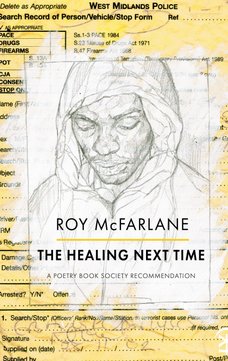
Our featured publication for December is The Healing Next Time by Roy McFarlane, published by Nine Arches Press.

Roy McFarlane’s second poetry collection, The Healing Next Time, is a timely and unparalleled book of interwoven sequences on institutional racism, deaths in custody and of a life story set against the ever-changing backdrop of Birmingham at the turn of the millennium. Here forms a potent and resolute narrative in lyrical and multidimensional poems which refuse to look the other way or accept the whitewashed version of events.

‘Claudia Rankine’s ‘Citizen’ contains the following key exchange from a visit to the UK: “Will you write about Duggan? The man wants to know. Why don’t you?” Few rose to this challenge but Roy McFarlane’s distinguished new collection The Healing Next Time takes on a whole history of official abuse and killing here with powerful and technically various poetry. McFarlane traces our hostile environment for new citizens, particularly those of colour, into some ugly corners, but it is a book of great love too, even when he’s dancing with ghosts, as he does here in a wonderful poem of that name. I cannot recommend The Healing Next Time enough.’  Ian Duhig

‘The American poet Claudia Rankine has written: ‘poetry has no investment in anything besides openness. It’s notarguing a point. It’s creating an environment.’ Rankine is one of the presiding spirits of Roy McFarlane’s second collection, The Healing Next Time. The environment he creates is one where the lyric thrives, but in audacious and bold forms crucial for a new brand of poetry. McFarlane’s poems celebrate who he is and where he’s from, never forgetting the sorrow and anger that accompanies what it means to be black and British today. Most powerful is a sequence of modern sonnets that track the terrible roll call of wrongful deaths in custody – moving and graceful memorials to ordinary men and women. His ‘openness’, to quote Rankine, comes from his honesty, his love for humanity and his outrage at injustice – this is an essential book for our times.’ Tamar Yoseloff

TheHealingNextTimeCover


1999 – Parts of a broken man

………………….the more a man has the more a man wants
……………………………………………………………………– Paul Muldoon

i.
On Sunday, the preacher’s speaking of revelation and repentance,
the end of the world is on the lips of news reporters.
Cults are spreading and in the basement of a computer department
they’re preparing for the invasion of the millennium bug –
…………………………………………we watch for the skies and miss the stones at our feet.

*

The family man is shooting a basketball, graceful
in motion and everybody’s watching the flight of the ball
reaching its zenith, then beginning to fall. All things fall;
summer rain, falling from grace, the fallout
…………………………………………….of a sordid affair; the ball’s falling.

*

Breadfruit, soursap, plantain. A Saturday morning ritual,
roles changed, the son takes his mother to a Caribbean stall
in Bilston market. She’s not as strong as she used to be,
her breathing laboured, but she snaps the heads, digs out the eyes,
……………………………………………….yellow yam, sweet potato, dasheen.

*

A daughter will be born soon, an olive branch
for the family man treading water after storms ceased.

ii.
A nation hears no evil, sees no evil, speaks no evil. A son’s blood,
a father’s sweat and mother’s tears will lead a retired judge,
and three diverse men to inquire in towns and cities
of the racism that kills. And the rocks will hear and rivers speak
\\\\\\\\\\\\\\\………………………………of the death of Stephen Lawrence.

*

After hearing of the death of Grover Washington Jr,
the family man’s falling asleep with his Walkman headphones;
between winelight and come morning, memories are awakened,
whirl of cassette tapes beginning the re-wind of illicit love:
…………………………………………….just the two of us building castles in the sky.

*

Late meeting, lips kissing, hands feeling, fingers…
Her halter-neck top has been drawn over her head,
the night air touching her breasts, powdered
with a flurry of goosebumps, he’s sucking greedily
……………………………………………….and it all begins again.

*

A mother’s sharing roast breadfruit, ackee and saltfish
with a warning: please, set your house in order.

iii.
There are no purple skies but the prophet Prince lives
to see his words come alive, as people party like it’s 1999.
We could die any day. James Byrd Jr died the year before;
lynching-by-dragging, hate driving for miles in a pick-up-truck,
,,,,,,,,,,,,,,,,,,,,,,……………….,……….driving from century to century.

*

He’s speaking at public inquiries, tongue heavy with injustice,
teeth grinding to the sound of another death in custody.
There’s a bitter taste he needs something sweet; later in a private place
her labia moistened by his tongue, she guides his erection deep
……………………………………………..and voices are lost in each other’s mouths.

*

He’s singing gospels, praying repentance into the early morning,
following traditions from sunny islands, avoiding the tears of his wife,
who’s dreaming of impending sorrows. The Millennium arrived
drunk with Hogmanay, midnight mass, Kwanzaa blessings and Prince
………………………………………………alighted from the heavens in a purple robe.

*

A new job, but the more a man has the more a man wants.
He leaves doors unclosed, doors that ache in the wind.


Their hands

Trying to fashion a world that will hold all the people
All the faces, all the adams and eves and their countless generations
………………………………………………………………..
For My People – Margaret Walker

Their hands loved and caressed, cajoled the fears out of lonely nights,
………….fed men with hope and washed the indignity off their faces
………….and in the cold morning would unwrap themselves from men
………….who’d venture another day into fogs of uncertainties.

Their hands worked too. Worked in mills and factories,
………….mopped floors, fed people, cut cords of the new born
…………..worked day and night for pay packets that weighed
…………..less than those called Mary and Jane.

Their hands knew change, change in their bodies, seasons
………….of blood that ceased, the beginning of life and in those times
………….found God, lost God, loved God, became gods bringing life
………….into this world and sometimes cried in the twilight of stillbirth.

Their hands have brushed the dust of hate from paths and doorsteps
………….scrubbed hallways clean of the ignorance of others but sometimes
………….bitter blood seeps from outside and anger boils over from generation
………….to generation turning hands into clenched rage on the eve of riots.

Their hands have lost the gloss of youth, are loose with veins like
…………tree roots bursting to the surface, some creaking painfully,
………….some twisted, knuckles thickened, others shaking violently,
………….others holding on to memories in the dirges of dust to dust.

Their hands are the hands of women who loved freedom. Hands
………….that tried to make a new world from patchwork quilts
………….soft enough to lay down and rest on, large enough to cover
………….all the people and strong enough to hold us all together.


A British thing to do

standing in queues; queues
appear out of nowhere
and disappear; queues
are filled with weathers
and gossip; queues bulge
ahead with best mates
and family; queues will have
the annoying kid screaming
and twisting; queues
will be colored with tuts
and intakes of frustration
and always I’m running late
conversations on mobiles.
Queues are always held up
by the man with change
scattered across the counter
or the woman with a list
of needs and one last
thought to share. Queues
may have the occasional
lovers lost in each other
or the lover walking away
lost in disbelief. Queues
of apologies of I’ll be quick
and the one behind shouting
what the hell is holding up this line?
Queues that begin on Boxing
Day and end on the opening
of New Year Sales; queues
inside and outside buildings,
straight around corners.
And there’s always is this
why we fought two bloody
world wars, to be over-
run by bloody foreigners?


Previous publication credits are Somewhere to keep the rain (Winchester Poetry Festival 2017) Freedom in the City National Poetry Day (Writing West Midlands 2017) and Why Poetry? Lunar Poetry Podcast (Verve Poetry Press 2018), respectively


Roy McFarlane was born in Birmingham of Jamaican parentage and has spent most of his years living in Wolverhampton. He has held the role of Birmingham’s Poet Laureate and Starbucks’ Poet in Residence, and is presently the Birmingham & Midland Institute’s Poet in Residence. Roy’s writing has appeared in magazines and anthologies, including Out of Bounds (Bloodaxe, 2012), Filigree (Peepal Tree, 2018) and he is the editor of Celebrate Wha? Ten Black British Poets from the Midlands (Smokestack, 2011). His first full collection of poems, Beginning With Your Last Breath, was published by Nine Arches Press in 2016.

The Healing Next Time is available to purchase from the Nine Arches Press website.